
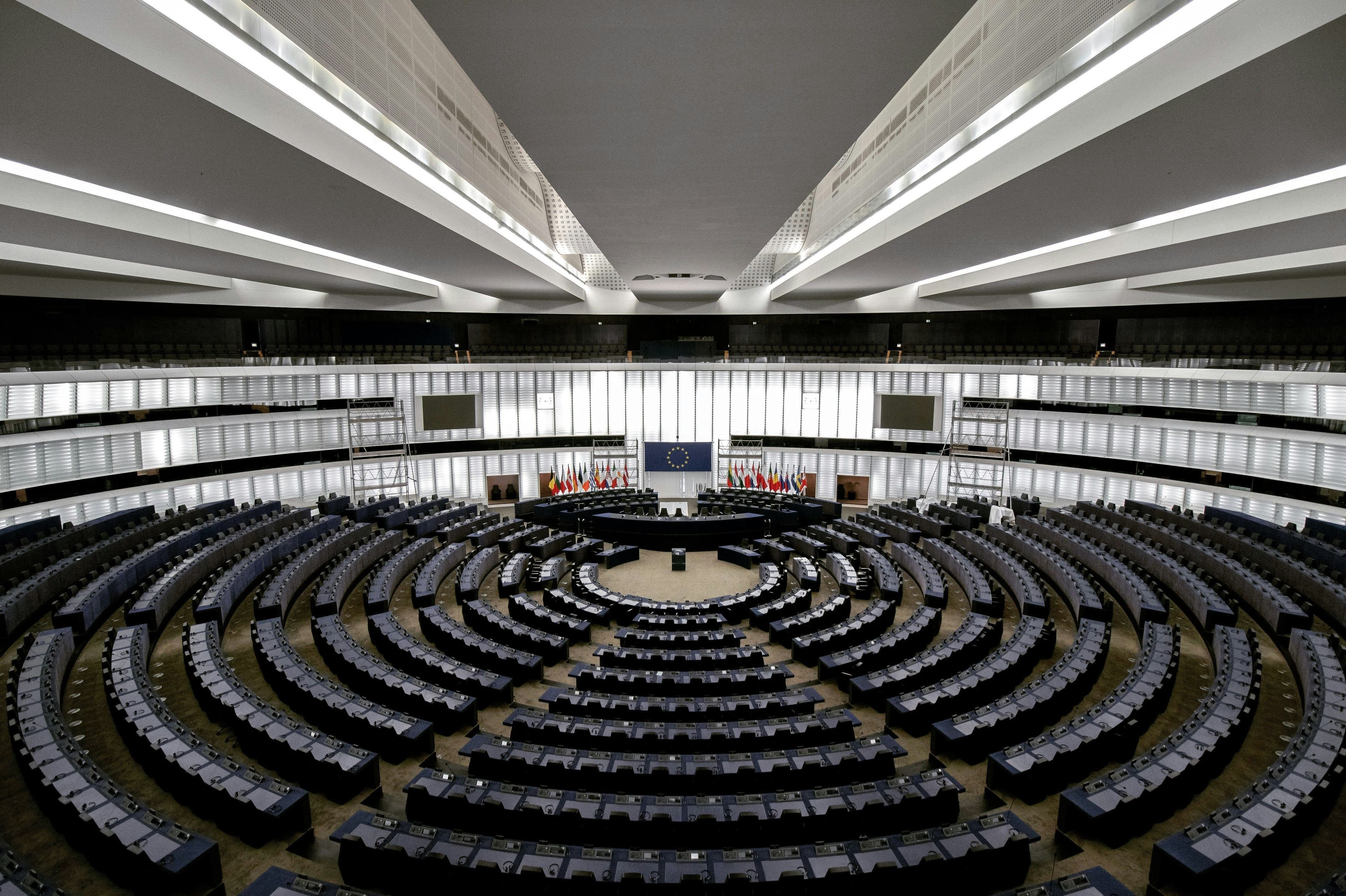
There is a question that the European political class prefers not to answer directly: who elected the European Commission? The answer is simple nobody. Ursula von der Leyen was not chosen by any European voter. She was appointed by governments, confirmed by a parliament elected by national party lists with declining participation, and governs with powers that no original treaty ever imagined concentrating in a single supranational institution.
This is not a criticism of the European idea. It is a criticism of what the European idea has become.
Europe of the Peoples vs. Europe of the Bureaucrats
The Europe that the founders imagined was a Europe of sovereign nations that cooperated in specific domains of trade, free movement and peace. It was an architecture of coordination, not replacement. National states would continue to be the locus of legitimate political decision because they were and continue to be the locus of democratic identity.
What the European Union has become is different. It is an entity with expanding competencies permanently, with a bureaucracy that produces regulation at a pace that no national parliament can scrutinize effectively, and with an institutional culture that treats the deepening of integration as an end in itself, regardless of the expressed will of citizens. When France and the Netherlands voted against the European Constitution in 2005, the answer from Brussels was to repackage the same document as the Treaty of Lisbon and push it through without a referendum.
The message was clear: integration advances regardless of what voters decide.
The Green Deal and Democracy
The European Green Deal is the most recent example of this pattern. An agenda of economic transformation of historical scope that affects the automobile industry, agriculture, construction, transportation, consumption patterns of hundreds of millions of people was designed by technocrats, negotiated between unelected institutions, and implemented through regulations that have the force of law without passing through national parliaments.
The farmers who blocked Brussels in 2024 were not protesting against environmental protection. They were protesting against the imposition of rules that destroyed their livelihoods without anyone having consulted them. The institutional response was the usual one: some tactical concession, no structural review, and the restart of the process as soon as the cameras left.
Portugal is a country with little weight in European negotiations, very dependent on community funds, and with a political class that for decades has used "Brussels requires it" as a shield for decisions it does not want to defend publicly. This dependence has a cost not only economic, but democratic.
Sovereignty Is Not Isolation
Defending national sovereignty is not defending isolation. It is defending that decisions affecting the lives of Portuguese people are made by those Portuguese people have elected and can be reversed when Portuguese people change their minds.
In a democracy, alternation is possible. A government is elected, a policy is tested, what does not work is corrected. The current architecture of the European Union makes this democratic correction increasingly difficult. Directives are transposed, regulations applied, targets imposed and the national voter discovers that their vote has increasingly less practical consequences on the matters that affect them most.
The conservative answer to this problem is not to leave Europe. It is to demand a different Europe more subsidiary, less centralizing, that respects the diversity of the nations that compose it instead of treating it as an obstacle to integration. Portugal has history, culture, language and identity of its own that predate by centuries any European institution. That identity is not a threat to the European project. It is the reason why it is worth having a European project that respects it.
This article represents the editorial opinion of Atlas Portugal.